From the Library · Spellcraft & Practical Magick
Raising and Directing Energy
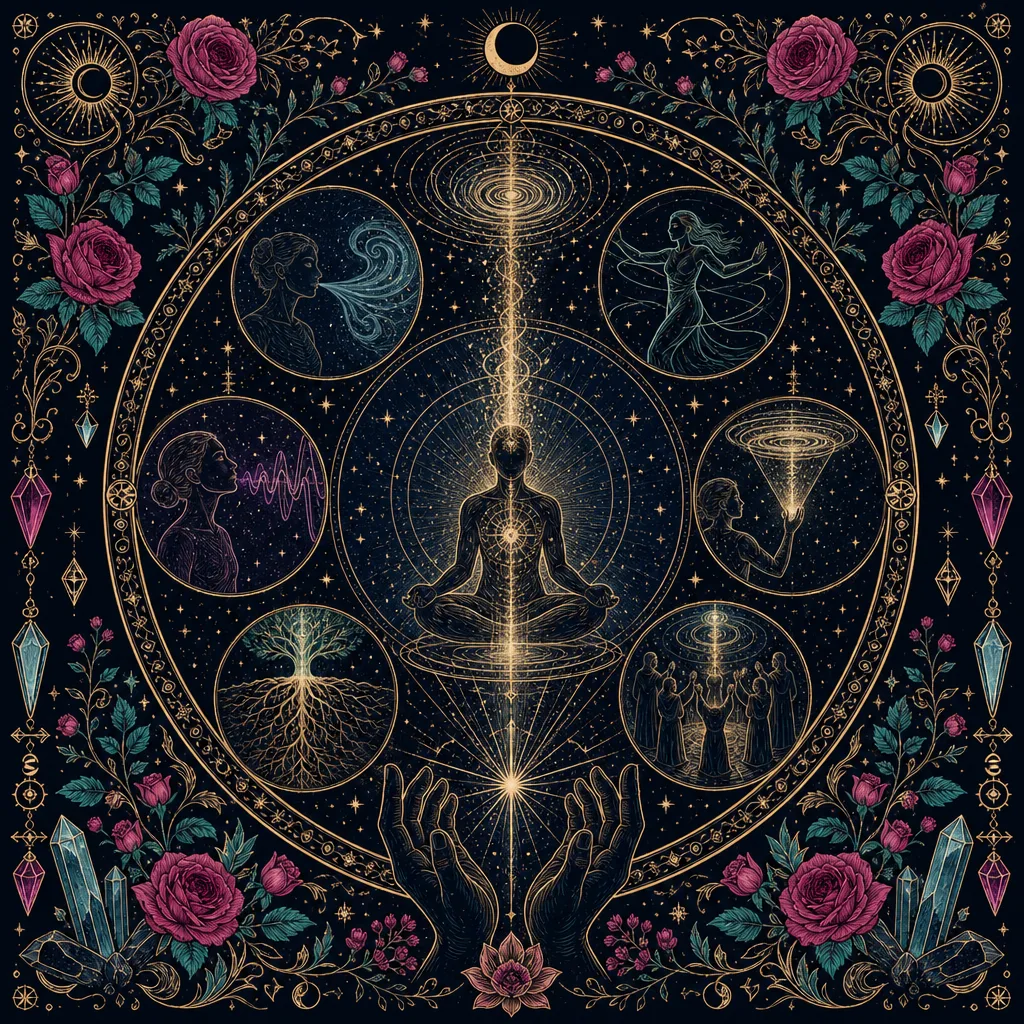
A thorough guide to what practitioners mean by energy in magickal work, how to sense and build it, and the major methods for raising and directing it effectively. Covers breath, movement, chant, visualisation, the cone of power, grounding, and the differences between solo and group work.
Every act of magick involves the same basic sequence: an intention is set, energy is gathered and built, that energy is directed toward the intention, and the surplus is returned to the earth. The raising and directing of energy is the central, active phase of this sequence, and it is where much of the real skill in magickal practice lives. A spell with a clear intention but poorly raised or poorly directed energy is like a letter written with precision and then dropped in the hallway rather than posted. The words are right; the mechanism has failed.
The word “energy” in this context refers to something that different practitioners describe quite differently, and that honest diversity of description is worth acknowledging. Some practitioners experience energy as a felt sensation in the body: a warmth in the hands, a tingling along the arms, a pressure in the chest or at the crown of the head. Others describe it as a quality of charged attention, a heightening of focus that is palpably different from ordinary concentration. In the energetic model, energy is a real subtle substance that flows through and around living beings and can be gathered, shaped, and projected by an act of will. In the psychological model, what is called energy is the full mobilisation of the psyche’s resources in the direction of an intention, including subconscious processes that are not normally available to conscious direction. In the devotional model, the practitioner is calling on and channelling divine or elemental force rather than generating energy from themselves. Each of these models produces real results in practice, and most experienced practitioners hold them simultaneously rather than committing to one as the exclusive truth.
Learning to Sense Energy
Before you can raise energy reliably, it helps to develop the ability to sense it. The following exercise is widely used as a beginning practice and is sometimes called the energy ball exercise.
Sit comfortably and take several slow, deep breaths to settle your attention. Hold your hands about six inches apart, palms facing each other. Breathe steadily and focus your attention on the space between your palms. After a minute or two, begin slowly moving your hands slightly closer together and then slightly apart, as if gently compressing and expanding a small sphere of air. Many people notice a warmth, a tingling, a magnetic sensation of resistance or pull, or a subtle thickness in the air between the palms. These sensations are the beginning of energetic sensitivity.
Practise this for several minutes each day for a week. The sensation becomes more reliable and distinct over time, and the skill generalises: you will begin to notice energetic qualities in places, in objects, and in other people, which is useful for every aspect of magickal work from reading the energy of a room before cleansing it to assessing whether a tool has been properly charged.
Breath
Breath is the most universally available method of raising energy because it is always present and requires no external tools. Controlled, rhythmic breathing alters the state of the nervous system and creates a physiological condition in which focused attention is easier to sustain and the boundaries of ordinary self-awareness become more permeable.
A simple energy-raising breath practice: inhale slowly and steadily for a count of four, imagining as you breathe in that you are drawing vital force up from the earth through the soles of your feet and into your body. Hold the breath for a count of four while the energy accumulates in your centre, imagining it collecting in a point roughly two inches below your navel. Exhale for a count of four, but do not release the energy outward; instead, let the breath out while holding the gathered force within. Repeat this cycle eight to twelve times. By the end, most practitioners feel a distinct warmth or pressure in the body and a heightened quality of attention. This gathered charge is what you will subsequently direct.
Movement and Dance
Movement is one of the oldest and most powerful methods for raising energy, used in ecstatic traditions worldwide from Sufi whirling to the ring dances associated with folk ritual. Movement works because the body”s physical engagement draws the whole person, not just the mind, into the working. It is very difficult to remain detached or intellectually distant while dancing with full commitment to a purpose.
A simple movement practice for solo energy-raising: begin with slow, deliberate movement in place. Let your body respond to the intention of the working rather than following a prescribed form. Gradually increase the pace. You might move in a circle, clockwise for attraction and growth, counterclockwise for banishing and release. Let sound arise naturally with the movement; hum, breathe audibly, or allow wordless vocal sound to accompany the physical motion. Continue until you feel a clear peak of intensity building in the body. That peak is the moment of release.
Chant and Drumming
Chant raises energy through the resonance of the voice in the body and the hypnotic effect of repeated sound. Repetition gradually quiets the part of the mind that evaluates and comments, leaving the practitioner in a state of heightened, focused attention that is ideal for magickal work. Drumming serves a similar function through rhythmic sound, and the two are often combined.
A chant for magickal energy-raising can be as simple as the repetition of a word or phrase that names the intention, repeated in a rhythm that grows gradually faster and louder. “I draw health into my body” repeated in an increasing rhythm is a functional energy-raising chant. More traditional practitioners use deity names, classical power words, or established chants from their tradition. The specific words matter less than the sustained focus and the building rhythm.
The cone of power is a group practice that also works in a modified form for the solitary practitioner. In a group, participants stand in a circle and raise energy together through chant, movement, or both, allowing it to build into a shared field of intense focus. At the peak, the energy is directed by the group”s combined will toward the working”s intention and released in a single focused moment. The solitary equivalent is to build energy through chant or movement until you feel a clear peak, then consciously direct the gathered charge toward your intended target in one deliberate act.
Visualisation
Visualisation raises energy by engaging the imaginative faculty as an active channel rather than a passive observer. When you visualise with genuine focus and detail, the body responds as though the imagined scenario has some reality. This is the same mechanism that makes a vividly imagined threat produce physical fear; the body does not distinguish neatly between what is imagined and what is present.
For energy-raising, visualise a source of power appropriate to your working. For a working of growth and abundance, this might be warm golden light flowing down from above and collecting in your hands. For protection, it might be silver-white light condensing around your body like armour. For a fire spell, it might be a steady flame building at your centre. Feed the visualisation with detail, colour, sensation, and temperature as fully as you can, and maintain it with focused attention while your breathing supports the build. The energy you raise through this method is already shaped and coloured by the image you have used, which means it is partly directed by the visualisation itself.
A Brief and Respectful Note on Sexual Energy
Austin Osman Spare and, subsequently, various traditions of Western sex magick have described sexual arousal and orgasm as among the most powerful available methods for raising magickal energy. The principle is that the moment of intense physical and psychic engagement represents a genuine peak state in which the directive faculty has unusual force. This is a legitimate and historically attested method that remains part of some practitioners” work. It is also a private matter that requires the informed and genuine consent of all people involved, and it is not a suitable starting point for beginning practitioners who have not yet developed a stable grounding practice.
Directing the Energy
Once energy has been raised to a peak, it must be directed toward its intended target before it disperses. This is the moment of greatest importance in the working, and it requires that you have your intention clearly in mind before you begin raising rather than trying to formulate it at the peak.
At the moment of peak charge, focus all your attention on the target of the working. If you are directing energy into an object to charge it, hold the object or place your hands on it and feel the energy flowing from your body into the object. If you are directing energy toward a person or situation at a distance, build a clear image of that person or situation in your mind and release the energy toward it with a decisive act of will, spoken, visualised, or both. If you are directing energy into a sigil or candle, fix your attention on it and send the charge into it with a clear intention and then a deliberate act of release.
The release is important. A practitioner who raises energy and then holds on to it anxiously has not completed the working. The release is a genuine act of letting go, a willingness to allow the energy to go where it has been sent and to work in ways that may not be immediately visible. Many practitioners signal the release with a physical gesture, a sharp exhalation, a clap of the hands, or a spoken word such as “so mote it be” or “it is done.”
Grounding After the Working
After any significant energy-raising, you will likely have surplus charge in your system that was not fully directed or released. This surplus, if not returned to the earth, tends to produce restlessness, agitation, difficulty sleeping, or a mild scattered feeling sometimes called being “spaced out.” Grounding is the practice of returning this surplus to the earth.
The simplest grounding method is to sit or stand and imagine roots growing downward from the soles of your feet and from the base of your spine deep into the earth. Feel the surplus energy flowing down through these roots and into the ground, where it is received and neutralised without harm. Continue until you feel settled and present. Eating something immediately after intense ritual is also a traditional and effective grounding practice, because the physical act of digestion is strongly anchoring.
Grounding is also good practice before a working, not only after it. Entering a working in a grounded state means you are building from a stable foundation rather than from an already agitated or scattered one, and the energy you raise tends to be cleaner and more directional.
Raising Energy Alone and in a Group
Solo energy-raising requires greater self-direction than group work and benefits from consistent practice of a single preferred method before attempting to combine several. Begin each session with the same grounding practice, then use the same primary raising method for several weeks until you can reliably reach a state of genuine charge. Once that reliability is established, you can begin varying the approach.
Group energy-raising has a different quality from the start. When multiple people direct their attention toward a shared intention, the aggregate field builds more quickly and reaches greater intensity than most solo practitioners can achieve alone. The practical challenge in group work is synchronisation: if participants are at different stages of engagement, the energy tends to scatter rather than build coherently. An experienced facilitator or a well-established group with a shared practice can direct a cone of power with remarkable force. If you work with a coven, circle, or informal group, make time to practise the raising together even when there is no specific working underway, so that the shared rhythm becomes familiar.
Energy-raising is a learnable skill that improves substantially with practice. The first several attempts may produce only a mild sensation or a general heightening of mood. Over months, the ability to build a clear, directed charge and release it with intention becomes dependable and noticeable. Record your practice, note which methods work best for you at which times, and give the skill the patient attention it deserves.