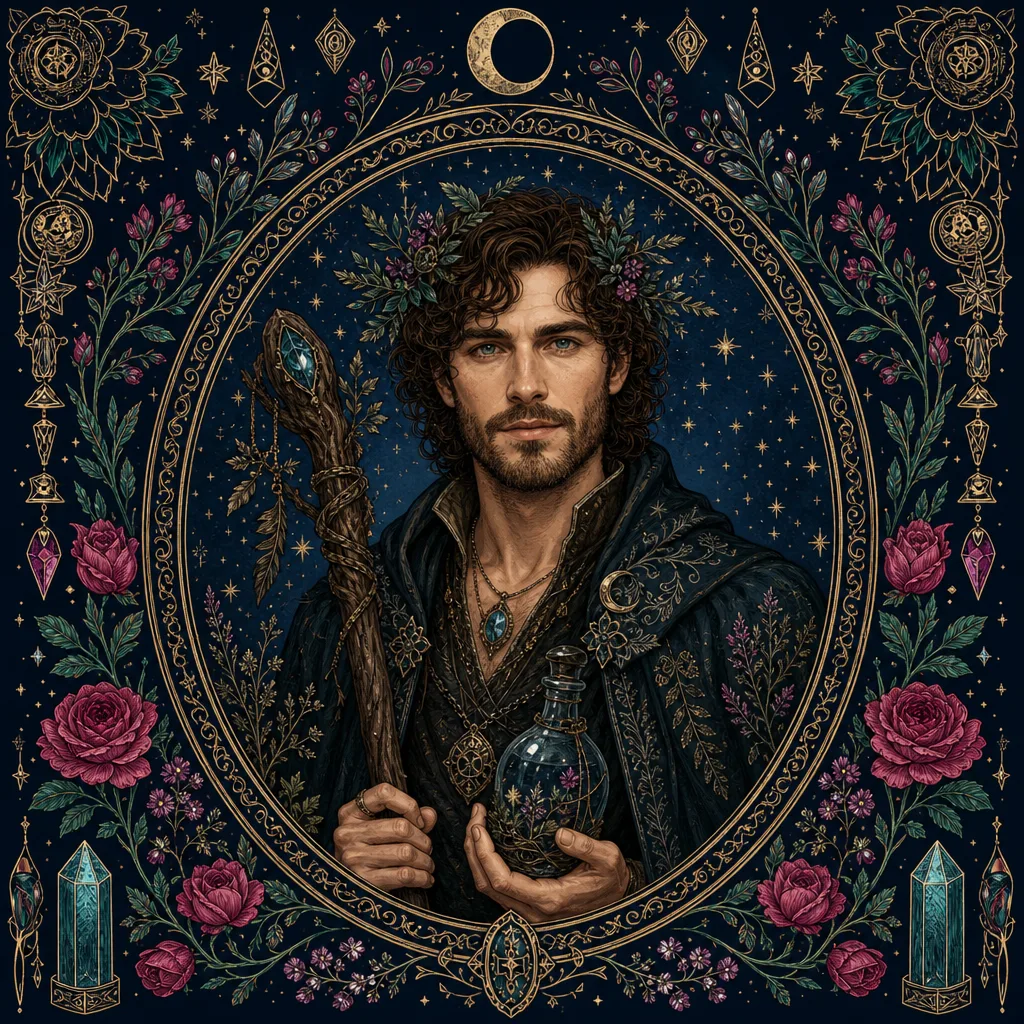
Witches & Their Paths
Faery Witch
Also called Fairy Witch, Fae Witch
A faery witch is a practitioner who works in deliberate relationship with the faery realm and its inhabitants, drawing on British and Celtic fairy tradition to inform their magic and their relationship with the spirit world.
- Tradition
- British and Irish fairy tradition, with influence from Scots Gaelic and Welsh lore
- Standing
- Open
A profile of the Faery Witch
The careful neighbour who leaves cream at the old thorn tree, reads Katherine Briggs cover to cover, and never says thank you out loud.
- Loves
- ancient boundary trees and hawthorns, midsummer and cross-quarter mornings outdoors, Scottish Gaelic fairy lore, folklore collections from living tradition, leaving offerings without expectation.
- Hobbies and pastimes
- landscape walking with folk-lore awareness, learning regional fairy taxonomy, trance work at outdoor sites, dream recording and analysis.
- Dream familiar
- A white hare who appears only at dawn and has never once been where you thought it was going.
- Found in their element
- A faery witch is found outdoors before the rest of the world is awake, at the base of an old tree that has had offerings left at its roots for two years running.
- Signature objects
- a sprig of rowan carried for protection, a small crock for outdoor cream offerings, a worn copy of Katherine Briggs's Dictionary of Fairies, iron in some small form always on the person, elderflower or foxglove grown near the door.
A faery witch is a practitioner who works in deliberate relationship with the fairy folk of British and Celtic tradition, treating these beings as real, powerful, and capable of genuine relationship with humans. The fairy realm in this context is not a children”s story backdrop; it is the otherworld that runs parallel to the visible world, populated by ancient and often formidable beings whose cooperation can bring great benefit and whose displeasure can cause real harm.
Working with fairy folk is not the same as working with angels, ancestral spirits, or gods, though those relationships may coexist in a faery witch”s practice. The fairy folk of genuine folk tradition are a category unto themselves: neither human nor divine, closely tied to specific landscapes, possessed of their own social structures and codes of conduct, and requiring a particular kind of careful, knowledgeable approach from any human who seeks their company.
The work
The faery witch”s practice begins with study of the actual folk traditions around fairy beings: the regional variations across Ireland, Scotland, Wales, England, Cornwall, and the Isle of Man; the specific categories of beings documented in each tradition; and the detailed body of traditional etiquette and protocol that folk memory preserved for dealing with them safely and productively.
This is not academic study alone. The faery witch takes what is learned from the historical record and applies it practically: leaving consistent offerings at significant outdoor sites, approaching ancient trees and fairy mounds with respect and protocol, and developing a regular practice of contact through trance, dream, and outdoor ritual. The relationship develops slowly and requires patience; the fairy folk are not known for appearing on demand or operating on human timescales.
Offerings are central. Traditional offerings in British and Irish fairy lore include cream, butter, honey, bread, fresh water, and portions of any food cooked in the household. Many faery witches maintain a regular outdoor offering practice at a site near their home that they have selected as a contact point, visiting consistently and leaving gifts without expectation of immediate return. The relationship is built over years.
Protective work is equally important. The same tradition that records fairy gifts and assistance records fairy capriciousness, fairy theft of humans or babies, and fairy-sent illness. A faery witch learns the traditional protective measures: rowan berries and branches, cold iron, turning garments inside out, specific prayers and spoken formulas, and the importance of never offending the Good Neighbours by discussing them disrespectfully, neglecting offerings, or disturbing sites associated with them.
History and tradition
The fairy beliefs of Britain and Ireland are among the most extensively documented bodies of folk tradition in the English-speaking world. The scholarly collections of the nineteenth and early twentieth centuries, including those of W.Y. Evans-Wentz, Lady Gregory, and later Katherine Briggs, preserve an enormous wealth of material from living folk memory describing the nature, behaviour, and proper treatment of fairy beings.
This tradition includes the belief, recorded across many regions, that certain humans were particularly connected to the fairy world: those born at liminal moments, those taken and returned, those with second sight who could perceive the fairy folk in their everyday movements. These individuals were sometimes called the fairy-touched or those who had the gift, and they served as intermediaries between the human and fairy realms, exactly the role the modern faery witch consciously takes up.
The formal Faery Tradition initiated by Victor and Cora Anderson in America, and developed by Gwydion Pendderwen and Starhawk among others, is a specific initiatory tradition quite different from the folk-magic-rooted faery witchcraft described here. The two share vocabulary but not structure; the folk-based path draws on historical documentation rather than twentieth-century initiatory lineage.
Walking this path
Beginning the faery witch path means beginning with serious reading of primary and scholarly fairy tradition rather than with contemporary fantasy-influenced material. Katherine Briggs” A Dictionary of Fairies is a comprehensive starting point; Evans-Wentz”s The Fairy-Faith in Celtic Countries, though dated in places, preserves authentic folk testimony. The goal is to understand what the beings of this tradition actually are according to the people who lived alongside them, before layering any personal or aesthetic interpretation.
From that foundation, outdoor practice develops organically. Finding and returning regularly to a site that feels significant, building a consistent offering practice, and learning to hold quiet attention rather than demanding obvious contact are the practical starting points. The faery world is not obligated to make itself dramatically obvious to newcomers, and the faery witch who sustains their practice through long periods of apparent silence is demonstrating exactly the quality of character that the tradition says the fairy folk respect.
In myth and popular culture
The fairy folk of British and Irish tradition have been among the most extensively imagined beings in Western literature, though the gap between how popular culture depicts them and how folk tradition actually understood them is considerable. The earliest literary treatments, including the fairy episodes in Edmund Spenser’s The Faerie Queene (1590) and the fairy court in Shakespeare’s A Midsummer Night’s Dream (1595-1596), drew on living folk belief even as they transformed it into courtly allegory. Titania, Oberon, and Puck are literary constructions, but they carry traces of genuine fairy tradition: Oberon derives from Alberich of Germanic legend, and Puck is a genuine English folk spirit recorded in regional tradition well before Shakespeare used him.
The Victorian era produced both the prettification of fairies into small-winged flower-creatures, epitomised by Richard Doyle’s illustrations and later by Arthur Rackham, and a scholarly counter-movement that took fairy belief seriously as cultural data. W.Y. Evans-Wentz’s The Fairy-Faith in Celtic Countries (1911) and Lady Gregory’s Visions and Beliefs in the West of Ireland (1920) collected testimony from people who held genuine belief in the fairy folk, and these books remain valuable primary sources for the faery witch. W.B. Yeats, who contributed an introduction to Evans-Wentz’s book, maintained a lifelong personal engagement with Irish fairy tradition that informed his poetry throughout his career and was considerably more than literary affectation.
In contemporary fiction, Susanna Clarke’s Jonathan Strange and Mr Norrell (2004) imagines English fairy tradition with a scholarly seriousness that few fantasy novels achieve, particularly in its treatment of the Raven King and his relationship with human magicians. Clarke’s fairies are genuinely alien, morally complex, and tied to specific landscapes in ways recognisable from folk tradition rather than fantasy convention. Her short story collection The Ladies of Grace Adieu (2006) extends the same world with particular attention to the women who work with fairy tradition on its own terms. Holly Black’s The Cruel Prince (2018) and its sequels are oriented toward a younger audience but draw on the Irish sidhe tradition with more fidelity to traditional fairy character, including capriciousness and genuine danger, than most of the genre manages.
People also ask
Questions
Are faeries in faery witchcraft the same as cute cartoon fairies?
No. The fairy folk of British and Celtic tradition, variously called the Good Neighbours, the Fair Folk, the Gentry, or simply the Fae, are powerful, ancient, and often capricious beings with their own complex societies and motivations. They can be generous allies and dangerous offenders of propriety in equal measure. The contemporary cartoon fairy aesthetic is a heavily sanitised version of beings that traditional folk culture treated with genuine awe and wariness.
What is the fairy mound or sidhe and why does it matter?
In Irish and Scottish Gaelic tradition, the sidhe (pronounced "shee") are mounds in the landscape understood to be entrances to the fairy otherworld. The beings who live there, the Aos Si, are the supernatural inhabitants of these realms. A faery witch who works in Celtic-influenced tradition treats these mounds and their equivalents as genuine geographic loci of power, approaching them with offering and respect.
What are the traditional rules for dealing with fairy folk?
Traditional fairy etiquette, documented across British and Irish folklore, includes never saying "thank you" to a fairy (this is considered dismissive of obligation), always leaving offerings rather than asking without giving, being cautious about eating fairy food or accepting fairy gifts with unclear terms, never boasting about fairy relationships, and being careful about entering fairy spaces without invitation or protection. A faery witch learns these rules through study of folk tradition.
Is Faery Wicca or R.J. Stewart's Faery Tradition the same as faery witchcraft?
They are related but distinct. R.J. Stewart's Inner Traditions and the Faery Wicca materials developed by Kisma Stepanich are specific modern systems that draw on fairy tradition in structured ways. General faery witchcraft is a broader orientation toward working with fairy beings across the British and Celtic folk record, which predates and is not limited to any single modern system.
How does a faery witch make contact with the fairy realm?
Traditional methods include visiting liminal landscape features such as ancient trees, fairy mounds, springs, and stream crossings at liminal times such as dawn, dusk, and cross-quarter days. Specific plants such as rowan, elderflower, and foxglove are associated with fairy contact. Trance work, dreaming, and leaving offerings at consistent sites build the relationship over time. Patience and courtesy are more important than any specific technique.