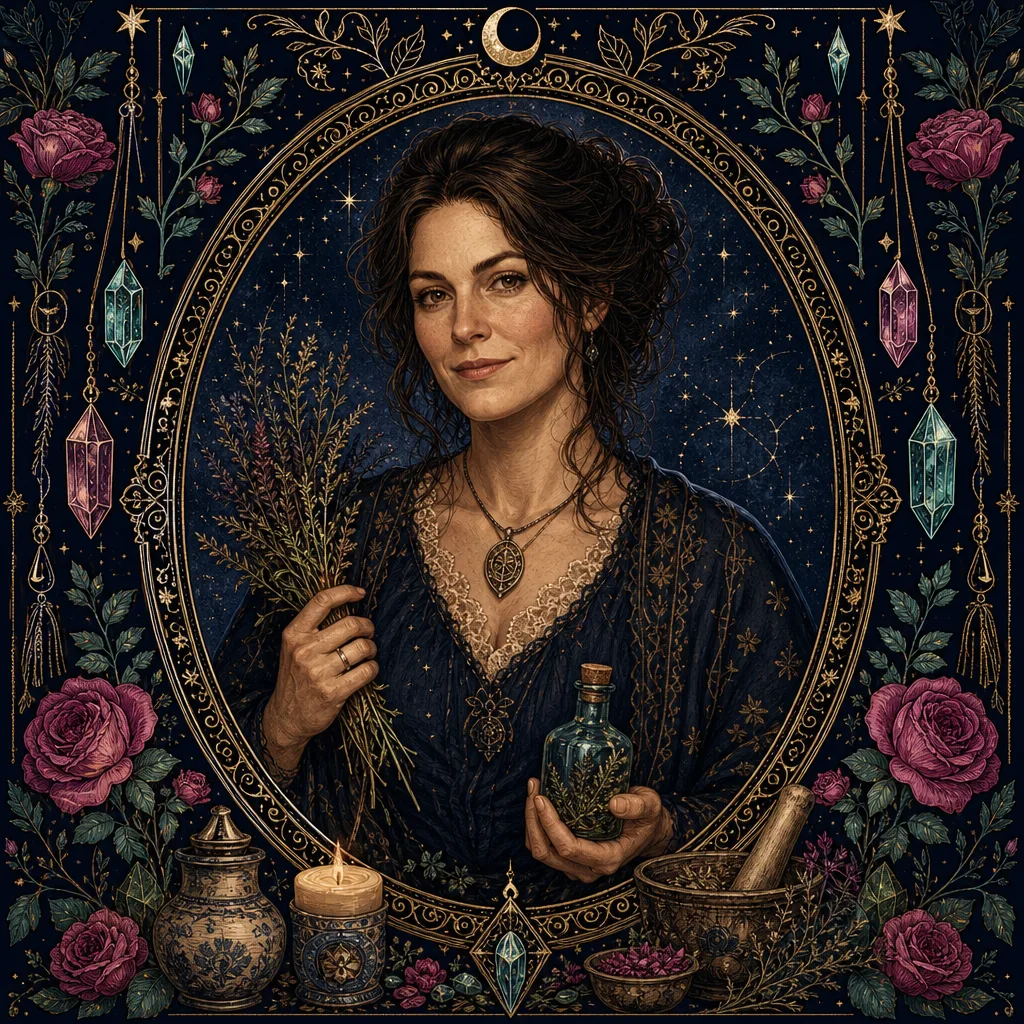
Folk Magick Practitioners
Pow-wow Doctor
Also called Braucher, Braucherin, pow-wow practitioner
A Pow-wow doctor is a practitioner of Pennsylvania Dutch Braucherei, a German-American folk healing and charm tradition that combines Christian prayer, spoken verbal charms, and sympathetic magic to heal illness, protect against evil, and bless people and property. The tradition is open and has been practised in Pennsylvania and surrounding regions for over two centuries.
- Tradition
- Pennsylvania Dutch Braucherei; German-American folk healing tradition
- Standing
- Open
A profile of the Pow-wow Doctor
A devout healer who carries generations of spoken charms in their memory and understands every cure as a gift flowing through them from God.
- Loves
- Pennsylvania Dutch country kitchen tables, worn family Bibles with pressed herbs between the pages, the smell of earth after rain, healing that costs the healer nothing but faith.
- Hobbies and pastimes
- preserving heirloom herb varieties, reading old German charm manuscripts, attending community folk festivals, keeping bees.
- Dream familiar
- A steady old barn cat who keeps its own counsel and never startles at the work.
- Found in their element
- At a scrubbed kitchen table in a farmhouse where three generations of the same family have been healed.
- Signature objects
- a handwritten Zettel charm on folded paper, a well-thumbed copy of The Long Lost Friend, a small cloth bag of dried herbs, a brass bowl for water work, a simple wooden cross.
A Pow-wow doctor is a practitioner of Braucherei, the Pennsylvania Dutch folk healing and charm tradition that German-speaking settlers brought to America in the eighteenth century. The Pow-wow doctor heals illness, provides protection against evil and witchcraft, blesses homes and livestock, and addresses a range of problems — physical, spiritual, and practical — through spoken verbal charms, prayer, laying on of hands, and sympathetic procedures grounded in a deeply Christian worldview.
The tradition is simultaneously pragmatic and devotional. The Pow-wow doctor does not understand their healing power as personally generated but as a gift of God, channelled through the practitioner’s faith and knowledge. This theological grounding shapes everything: the charms invoke the Trinity and Biblical figures, the healer works in a spirit of service, and the authority of the practice rests on the conviction that healing comes from a divine source working through human hands.
The work
The practical work of a Pow-wow doctor begins with assessment. A person comes with a problem — an illness that does not respond to ordinary treatment, a child with thrush, an animal that won’t thrive, a persistent string of bad luck, or a suspicion that someone has placed a hex. The practitioner listens, observes, and determines what kind of working is called for.
Verbal charms are the primary instrument. These are short spoken formulas, often in German or Pennsylvania Dutch, sometimes in English, that address the condition being treated. A charm for stopping bleeding might command the blood in the name of the Father, Son, and Holy Ghost. A charm for burns invokes coolness in the same sacred name. A charm for the evil eye names and dispels it. The words have been passed down within families and between practitioners for generations, and in many cases they are held with great care, not shared beyond the necessary moment of teaching.
Laying on of hands often accompanies verbal charming. The practitioner may pass their hands over the affected area while reciting the charm, in a gesture that combines physical touch with spiritual transmission. Specific counting gestures — three passes or nine passes — may be part of the procedure. Breath, too, may be directed over the affected area.
Sympathy magic appears in many Pow-wow procedures. Burying something to remove a condition, transferring illness to a tree or other living thing, writing the patient’s name and a statement of release and burning or burying it — these methods draw on the logic of sympathetic correspondence that the tradition shares with other European folk magic.
The Pow-wow doctor may also provide written charms (“Zettel”) for clients to carry or place in their homes, make up herbal preparations, or advise on protective measures for the household.
History and tradition
The Pennsylvania Dutch community formed from German-speaking settlers from the Palatinate, Switzerland, and surrounding regions who came to Pennsylvania in large numbers from the early eighteenth century. They brought with them a robust tradition of folk healing, charm practice, and magical knowledge that had deep roots in the German-speaking world.
The Braucherei tradition draws directly on German charm-book culture, including manuscripts and printed texts circulating in the German-speaking world. In 1820, John George Hohman published “Der lange verborgene Freund” (The Long Lost Friend) in Reading, Pennsylvania. This collection of charms, remedies, and protective procedures, presented within a Christian framework, became the foundational text of Pennsylvania Pow-wow in its printed form and remains in continuous use.
The tradition continued through the nineteenth and twentieth centuries within Pennsylvania Dutch communities, sometimes in tension with church authorities who viewed folk charming with suspicion, but sustained by the genuine need it met and the trust communities placed in their Braucherei practitioners. The 1928 murder of Nelson Rehmeyer in York County, Pennsylvania — a case involving suspected hexing — brought national attention to the tradition, but also distorted public understanding of it.
Walking this path
Pow-wow and Braucherei are open traditions, in the sense that no formal initiatory structure guards entry. Historically, the practice passed within families and between community members through direct teaching, and the charms themselves were often kept within those channels. The Long Lost Friend provides a substantial body of material in accessible form.
Contemporary practice of Braucherei is most authentic when it engages seriously with the Pennsylvania Dutch cultural context: the German linguistic heritage, the strong Christian framework, and the community ethic of service that underlies the role. Working from the text alone without that context produces something thinner than the living tradition.
A number of contemporary practitioners and scholars are actively working to document and maintain Braucherei as a living practice. The Kutztown Folk Festival and the Pennsylvania German Cultural Heritage Center at Kutztown University have been significant in this preservation work. Practitioners including those connected to the Long Lost Friend tradition continue to teach.
The role fits naturally alongside related folk-magic paths. The Hexenmeister tradition from which Pennsylvania Braucherei partly descended, the granny-witch tradition of Appalachia (which absorbed German influence through settlement patterns), and the broader cunning-folk tradition all share methods and assumptions with Pow-wow. Many contemporary folk-magic practitioners find the Pow-wow doctor framework useful for understanding the healing and protection dimension of their work.
In myth and popular culture
The Pow-wow doctor has no single mythic archetype but belongs to the broader lineage of the Christian folk healer, a figure present throughout European and American tradition who heals by the grace of God rather than by personal occult power. The cunning man and the wise woman of British tradition, the Kräuterhexe of Germany, and the curandero of Spanish-speaking communities all occupy this same structural position: the community healer whose authority rests on piety, knowledge, and a gift understood as divinely granted.
In American literature, the tradition surfaces most directly in accounts of Pennsylvania Dutch community life. Elsie Singmaster’s early twentieth-century fiction about the Pennsylvania Dutch includes encounters with Braucher figures, and the 1928 Rehmeyer murder case, in which Nelson Rehmeyer was killed by men convinced he had hexed them, generated substantial newspaper coverage and reshaped outsider perceptions of the tradition for decades. Rehmeyer’s story was treated sympathetically in Don Yoder’s folkloric scholarship and revisited in Ursula Hegi’s 2010 novel “Children and Fire,” though Hegi’s primary subject is a different Pennsylvania German community.
The Pow-wow doctor as a type appears in Pennsylvania folklore collections and in the work of researchers like Patrick Donmoyer, whose studies of Pennsylvania German charm manuscripts have brought renewed scholarly attention to the tradition. In popular media, the Amish and Mennonite communities of Pennsylvania have attracted ongoing fictional interest, and the supernatural beliefs documented in those communities, including beliefs about hexing and counter-magic, appear in films and novels ranging from the respectful to the sensationalist. The tradition’s distinctive Christian-magical fusion gives it a character that resists easy categorisation within the usual frameworks of horror or fantasy, which may be one reason it appears less often in popular fiction than it deserves.
People also ask
Questions
What does "Pow-wow" mean in this context?
The term "Pow-wow" as used in Pennsylvania Dutch Braucherei is not derived from or related to Native American ceremony. It appears to derive from a seventeenth-century English adaptation of an Algonquian word that was applied to various kinds of folk healers and cunning folk in colonial America. John George Hohman's 1820 book "Pow-Wows, or The Long Lost Friend" established the term in print for this German-American tradition. The tradition itself is of European German origin.
What is Braucherei?
Braucherei (from the German "brauchen," meaning to use or to need) is the Pennsylvania Dutch name for the folk healing and charming tradition brought to America by German-speaking settlers in the eighteenth century. A Braucher or Braucherin is the practitioner of this art, working with spoken verbal charms, prayer, laying on of hands, and sympathetic procedures to heal illness and address magical harm. The tradition is deeply Christian in its framework while drawing on older German folk-magic structures.
What is "The Long Lost Friend" and how important is it?
"The Long Lost Friend" (Der lange verborgene Freund) was published by John George Hohman in Reading, Pennsylvania in 1820 and remains the most important printed source for Pow-wow tradition. It contains hundreds of charms for healing, protection, luck, and counter-magic, drawing on German folk-magic manuscripts and presenting them within a Christian framework. Many Pow-wow practitioners still consult this text, and it remains in print.
Is Pow-wow connected to witchcraft or the occult?
Pow-wow doctors themselves have historically been at pains to distinguish their practice from witchcraft, understanding their work as God-given healing power rather than occult art. In the community, the Pow-wow doctor was often seen as the counterpart and opponent of the "hex" or witch, performing counter-magic against harmful workings. Contemporary practitioners vary in how they relate their practice to broader occult or witchcraft frameworks.
Is Pow-wow still practiced?
Yes. Active Pow-wow practitioners remain in Pennsylvania and in diaspora communities, and there has been a sustained revival of interest in the tradition. Lee R. Gandee, Preston Zerbe, and more recently practitioners including H. Byron Ballard and researchers such as Patrick Donmoyer have contributed to the documentation and continuation of the living tradition.