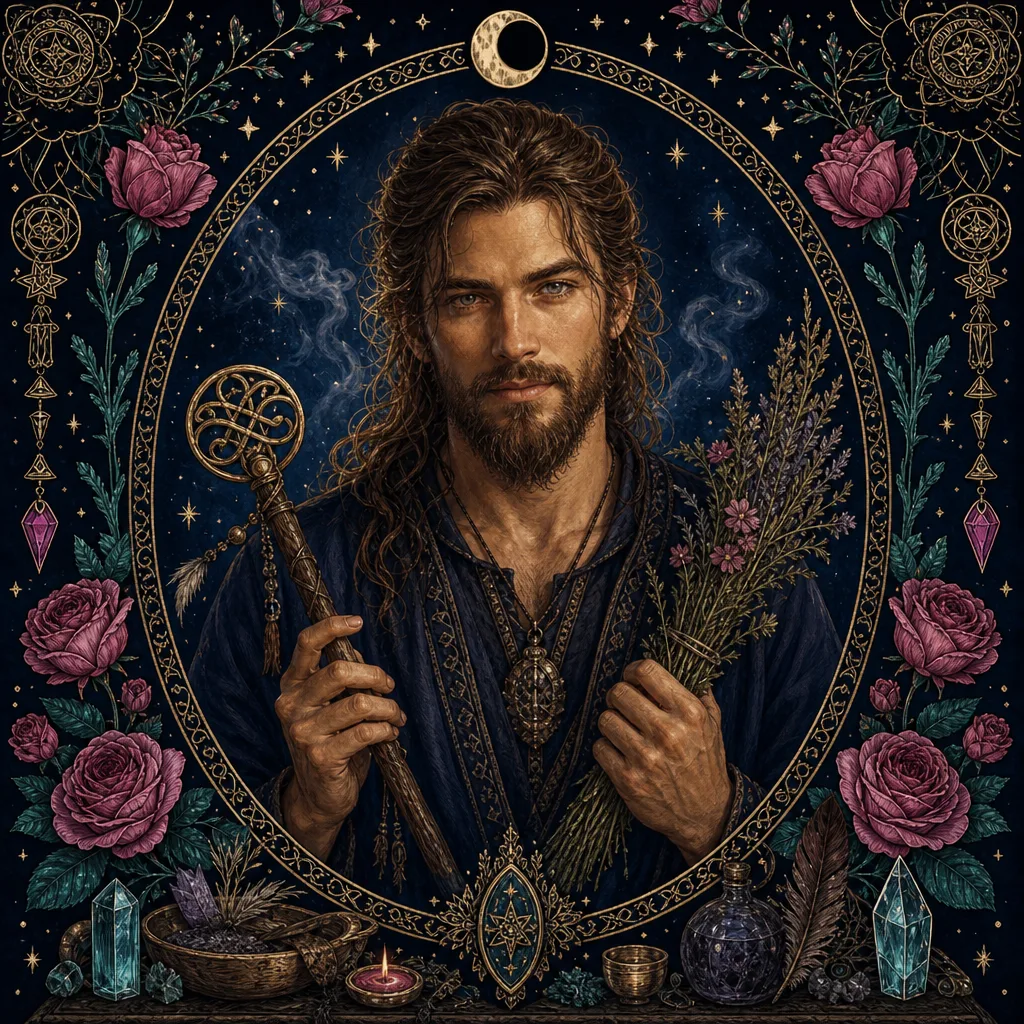
Spirit Workers
Seidr Worker
Also called seidkona, seidmadr, vitki
A seidr worker is a practitioner of seidr, the Old Norse magical and prophetic art associated with the Vanir deities, particularly Freyja, and with Odin, who learned seidr from Freyja. Seidr encompasses trance-based spirit work, prophetic seeing, the working of fate, and in modern reconstructed practice is practiced primarily within Heathen and Norse polytheist communities.
- Tradition
- Reconstructed Norse seidr practice; Heathenry and Norse polytheism
- Standing
- Open
A profile of the Seidr Worker
The seidr worker is a traveller between worlds, sitting in stillness while their awareness moves through the nine realms on behalf of those who cannot follow.
- Loves
- the sound of vardhlokkur building in a circle, Eddic poetry memorised aloud, deep winter darkness, old carved wood and linen, the particular hush before a working begins.
- Hobbies and pastimes
- studying the Eddas and sagas, trance journeying practice, ancestor work and genealogy, rune carving.
- Dream familiar
- A pair of cats like those who draw Freyja's chariot, sleeping at the feet of the high seat.
- Found in their element
- Found in the prepared ritual space where the high seat stands ready, or bent over the sagas by lamplight long after the household has gone to bed.
- Signature objects
- a high seat or volva's staff, a drum for trance induction, a pouch of runes, a cloak of dark wool or fur, an altar to Freyja and the disir.
A seidr worker is a practitioner of the Old Norse magical art called seidr — a tradition of trance-based spirit work, prophetic seeing, and fate-working that the Norse sources associate primarily with Freyja and the Vanir deities and that Odin himself is said to have learned. In modern Heathenry and Norse polytheist communities, seidr is actively reconstructed and practiced, drawing on the historical sources while acknowledging honestly that reconstruction is what it is.
Seidr is not runic magic (galdr) and not simply Norse witchcraft in a generic sense. It is a specific magical mode: ecstatic, receptive, trance-based, and deeply entangled with the Norse understanding of fate (wyrd), the network of spirit beings who weave and influence it, and the particular capacity of trained practitioners to perceive and in some cases alter the web of fate”s weaving.
The work
The core of seidr practice is the trance state called “sitting in seidr” — a state of altered consciousness in which the practitioner”s awareness shifts from ordinary perception to an expanded mode capable of receiving prophetic knowledge, perceiving the spirit world, and engaging with non-physical beings directly. In the saga accounts, this state was induced and held with the assistance of a specific type of song (vardhlokkur, or ward-songs) sung by a supporting group of practitioners and community members.
In this trance state, the seidr worker performs oracular work: receiving questions from those who have gathered, consulting spirit sources for answers, and reporting what is perceived. The oracular dimension is central and is one of the features that distinguishes the seidr-trained volva from other practitioners in the historical accounts. The ability to see fate clearly and speak it truly — to access knowledge that ordinary consciousness cannot reach — is what the community gathered for.
Spirit journeying is another dimension of seidr work, particularly in modern reconstructed practice. The practitioner travels in spirit through the nine worlds of Norse cosmology, visiting specific realms for specific purposes: accessing wisdom from the well of Mimir, speaking with the ancestors in Helheim, encountering land spirits or alfar in their own domains. The world tree Yggdrasil and the web of wyrd serve as maps for this travel.
Working with fate — not merely perceiving it but influencing it — is described in the Norse sources as a seidr capacity, and this aspect is addressed in modern practice with appropriate caution. Many contemporary practitioners focus primarily on the prophetic and spirit-journeying dimensions rather than active fate-working, understanding the latter as requiring a level of development and established relationship that is not quickly achieved.
The physical setup for oracular seidr in the modern reconstructed form typically includes a high seat (the volva”s traditional position in the sagas), the assembly of supporting singers, specific ritual preparations of the space, and a clear opening and closing procedure that marks the boundaries of the working.
History and tradition
The Old Norse sources on seidr are substantial and specific enough to provide real grounding for reconstruction, while remaining ambiguous enough that considerable interpretive work is required. The Voluspa opens the Poetic Edda with a volva”s cosmological prophecy. The Ynglinga Saga describes seidr as Freyja”s art, taught to Odin. The Saga of Erik the Red”s account of Thorbjorg is the most detailed procedural description in the literature: her high seat, the specific foods she was given, the vardhlokkur songs that were needed, and the questions she answered.
Comparative context is important for reconstruction. The seidr tradition shares structural features with shamanic practices documented among the Saami, Evenki, and other northern peoples, including the trance journey, the supporting community role, and the use of specific sound to induce and hold the working state. This comparison is useful but must be handled carefully: the Norse tradition is not identical to any of these other traditions, and importing methods wholesale from Saami or Siberian shamanism without acknowledgment of the source is culturally problematic.
Modern seidr reconstruction began in earnest in the early 1990s with the work of Diana Paxson and the Hrafnar community in California. Paxson”s book “The Way of the Oracle” documents the Hrafnar approach and its development. Other practitioners and teachers in the Heathen community have developed their own protocols and frameworks, and the living reconstructed tradition is active and growing.
Walking this path
Seidr work is open, and it is a reconstructed practice: practitioners should approach it with the intellectual honesty that reconstruction requires, knowing where the historical evidence is solid and where it runs out, and being honest about the contemporary choices that fill the gaps.
Development as a seidr worker is gradual. Most serious practitioners begin with foundational work in Norse cosmology — learning the structure of the nine worlds, the key beings and their natures, the mythology that provides the context for understanding what you are doing — and develop trance capacity through sustained practice over months and years before moving to oracular or fate-working dimensions of the practice.
Working in community is both more traditional (the saga volva did not work alone) and more practically sound (trained supporting practitioners help hold the working and provide a reality-check function for what is perceived). Finding or building a community of practice within Heathenry or Norse polytheism provides the relational context in which seidr is most appropriately developed.
The seidr worker”s role overlaps substantially with the spae-wife — the two arts are related and sometimes practiced by the same person — and with spirit work more broadly. Many seidr workers also maintain active rune practice (galdr), devotional relationships with specific Norse deities, and ancestor practice as complementary foundations.
In myth and popular culture
In the Norse sources themselves, the most vivid portrait of a seidr worker in action appears in the Saga of Erik the Red (Eirik’s saga rauoa), in which the little-volva Thorbjorg arrives at a Greenland farm during a time of hardship, is received with specific ritual hospitality, and performs an oracular sitting that requires the community to sing the vardhlokkur before she can access the spirits and answer the questions pressed upon her. The account is detailed enough to have served as a practical template for modern reconstructors. The Voluspa itself presents a volva who has been summoned from death by Odin to recite the cosmological history and fate of the worlds; she is not a subordinate figure but someone whose knowledge exceeds even the Allfather’s, and she speaks from a position of authority rather than service.
In academic and popular literature, the seidr tradition has received serious attention since the late twentieth century. Hilda Ellis Davidson’s Roles of the Northern Goddess (1998) and her earlier The Road to Hel (1943) provide foundational scholarly treatments. Neil Price’s The Viking Way: Magic and Mind in Late Iron Age Scandinavia (2002), substantially revised and reissued in 2019, offers the most comprehensive modern archaeological and textual study of seidr, examining the material culture of volur burials alongside the textual record. Diana Paxson’s The Way of the Oracle (2012) documents the Hrafnar community’s reconstructed practice and is the most widely used practical guide in contemporary Heathen communities.
In fiction the volva and seidr-worker appear with varying degrees of accuracy. Joanne Harris’s novel The Gospel of Loki (2014) and her Runemarks (2007) engage with the Norse cosmological world and its prophetic figures. The television series Vikings (2013 to 2020) includes seer and volva figures as recurring presences, though their portrayal is atmospheric rather than historically precise. The video game Hellblade: Senua’s Sacrifice (2017), while not explicitly a seidr narrative, draws on Norse cosmology and the shamanic experience of world-crossing in ways that resonate with the tradition’s core concerns.
People also ask
Questions
What do the Norse sources say about seidr?
The Old Norse sources -- primarily the Eddas and the Icelandic sagas -- describe seidr as a form of magic associated with Freyja and the Vanir, involving a practitioner (typically a woman called a volva or seidkona) who enters a trance state to access prophetic knowledge, work fate, affect people and events at a distance, and communicate with spirit beings. The Eirik the Red's Saga account of Thorbjorg Little-Volva provides one of the most detailed descriptions of a seidr performance. Odin is also described as practicing seidr, though this was considered transgressive of gender norms for men.
What is the connection between seidr and ergi?
In Old Norse culture, seidr was associated with the quality of ergi -- a term connoting unmanliness, gender transgression, and passive sexual receptivity. Men who practiced seidr were considered ergi and were subject to social stigma (nid). This association likely reflects seidr's connection with ecstatic, receptive, and embodied practice that sat outside Old Norse masculine ideals. Contemporary practitioners generally approach the ergi dimension as historically important context rather than as a binding cultural rule, and men practice seidr today.
Is seidr different from runic magic?
Yes. Seidr and galdr (the magical use of runes and spoken charms) are described in the Norse sources as distinct magical arts, though they may be practiced by the same person. Seidr is ecstatic, trance-based, and spirit-mediated, while galdr is more verbal and operates through the power of sacred sound and symbol. The vitki (rune-worker) and the seidr-worker may overlap, but the methods and modes differ.
How is modern seidr reconstructed?
Modern seidr reconstruction draws on the Old Norse literary sources (the Eddas and sagas), comparative shamanism (drawing parallels with better-documented shamanic traditions in Siberia, Scandinavia, and Greenland that share structural features), and practical experimentation within contemporary Heathen communities. Diana Paxson's work with the Hrafnar group in the 1990s and 2000s developed one of the most widely known modern seidr protocols, drawing on trance induction, oracular sitting, and community song (vardhlokkur). These reconstructions acknowledge openly where the historical sources run out and contemporary practice begins.
What spirits does a seidr worker engage with?
Seidr workers in the modern reconstructed tradition typically work with the Norse cosmological beings: the Aesir and Vanir deities (particularly Freyja, Odin, and those associated with wisdom and fate), the disir (female ancestral spirits), the landvaettir (land spirits), the alfar (elves), and the dead. The nine worlds of Norse cosmology provide the map for spirit journeying, and the world tree Yggdrasil serves as the axis along which the seidr worker travels.